Key point:
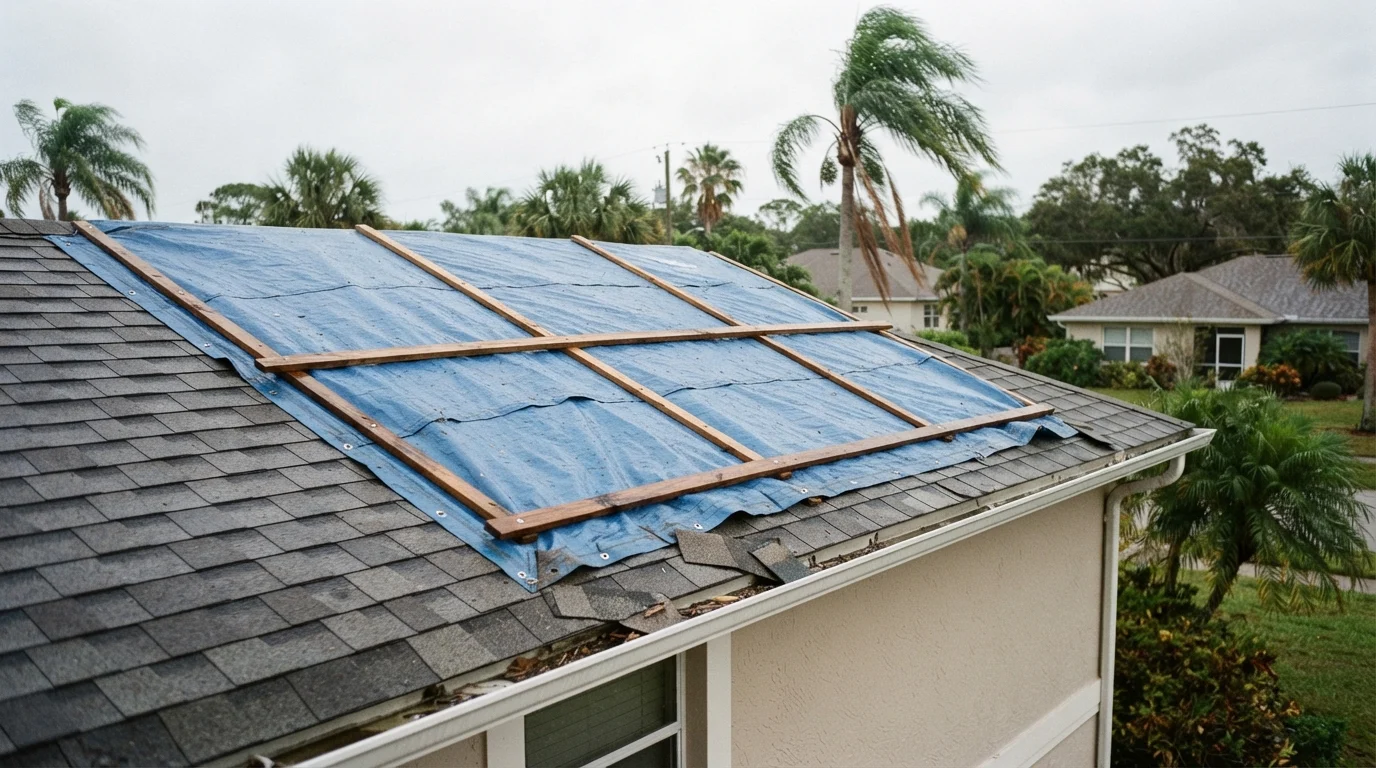
- Emergency roof tarping seals storm-damaged roofs with reinforced tarps to stop water intrusion until permanent repairs can begin.
- Fast tarping within 24 to 48 hours after a storm often limits interior damage and mold growth.
- A qualified roof tarping contractor in Ormond Beach, FL follows Florida Building Code practices when securing a damaged roof.
A damaged roof left exposed after a storm can let water soak into insulation, drywall, and framing within hours. A Roof Tarping Contractor addresses this by installing a weather-resistant barrier over the damaged section until permanent repairs are scheduled.
For residents dealing with wind-lifted shingles, fallen tree limbs, or hail punctures, the gap between the storm and the repair crew matters. Properly secured tarps reduce the odds of secondary damage such as warped subroofing, stained ceilings, or mold colonization in wall cavities. This step is often the difference between a contained repair and a much larger reconstruction project.
Why Emergency Tarping Matters After a Storm
Florida’s storm season brings a mix of wind-driven rain, hail, and falling debris that can compromise a roof’s surface in minutes. Once the protective layer is breached, every subsequent rainfall adds to the damage.
- Water intrusion can saturate attic insulation and ceiling drywall within a single rain event.
- Standing moisture inside a structure creates conditions for mold growth within 24 to 48 hours.
- Exposed decking and framing can warp or rot if left wet for extended periods.
The 2025 Atlantic hurricane season outlook from the National Oceanic and Atmospheric Administration called for an above-normal season, with forecasters citing a 60 percent chance of elevated storm activity along the Atlantic basin. That pattern underscores why homeowners in Ormond Beach, FL benefit from having a tarping plan in place before storm season peaks rather than after damage occurs.
What a Roof Tarping Contractor Actually Does
Emergency tarping is a distinct trade skill, not a simple tarp-and-rope job. A contractor trained in storm mitigation follows a sequence designed to withstand wind and prevent further water entry.
- Assess the damage to identify the full extent of compromised roofing material, not just the visibly obvious holes.
- Clear debris from the roof surface so the tarp lies flat against the deck.
- Secure a reinforced tarp using batten boards or screws driven into the roof structure, rather than relying on adhesive alone.
- Seal seams and edges to prevent wind from lifting corners during subsequent weather events.
- Document the damage with photos for insurance claims before the permanent repair begins.
This process matters because an improperly secured tarp can tear loose in high wind, leaving the structure exposed again just days after the first storm.
Emergency Tarping Compared to Permanent Roof Repair
| Factor | Emergency Tarping | Permanent Roof Repair |
| Timeline | Same-day to 48 hours | Days to weeks, depending on materials and permitting |
| Purpose | Stop active water intrusion | Restore long-term structural integrity |
| Materials | Reinforced poly tarps, battens | Shingles, underlayment, flashing, decking |
| Code considerations | Temporary measure, not a final fix | Must meet Florida Building Code standards |
Tarping is never a substitute for a permanent fix. It buys time so a full roof assessment and repair plan can proceed without additional water damage compounding the original problem.
Choosing a Qualified Contractor for Storm Response
Not every general contractor handles emergency roofing the same way. Readers in Ormond Beach, FL evaluating a storm-response provider should look for a few specific qualifications.
- Experience with steep-slope and low-slope roofing systems common in Florida construction.
- Familiarity with local building code requirements for temporary and permanent roof repairs.
- Availability for rapid response, since the first 24 to 48 hours after a storm are the most critical window.
- A documented process for photographing damage to support insurance claims.
Response speed from a contractor operating out of Daytona Beach, FL can also affect how quickly a tarp goes up after a storm passes through the region.
Frequently Asked Questions
How long does an emergency tarp typically last? A properly installed reinforced tarp can hold for several weeks, though it is intended as a temporary measure until permanent roofing repairs are completed.
Does tarping require a building permit? Temporary emergency tarping generally does not require a permit, but permanent roof repairs that follow typically do under Florida Building Code.
Can a tarped roof still leak during heavy rain? A correctly secured tarp with sealed seams should prevent most water intrusion, though extreme wind-driven rain can test any temporary covering.
Should homeowners attempt to tarp a roof themselves? Climbing a damaged roof carries fall and structural risks, so professional installation is generally safer than a homeowner attempt, especially after storm damage.
Business Information and Next Steps
Based in Daytona Beach, FL, White Ibis Restoration serves customers across Ormond Beach, FL as a contractor identified with the local area.
Published information covering service details for the area is available through Read More about roof tarping, which outlines the local service footprint.