Morning heel pain can be especially frustrating because it often appears after hours of rest. Someone may wake up, place their foot on the floor, and immediately feel sharp or concentrated discomfort around the heel. After a few minutes of walking, the area may loosen somewhat, only for the discomfort to return later in the day.
Stretching and changing footwear are often reasonable first steps. However, when heel pain keeps returning despite those changes, the underlying issue may involve more than temporary muscle tightness or poor shoe support. For some adults in Verrado, AZ, persistent symptoms may prompt a closer look at the soft tissues that absorb repeated stress during standing and walking.
Why Heel Pain Can Feel Worse in the Morning
The tissues around the bottom of the foot experience repeated loading throughout the day. During sleep, those tissues are relatively inactive for several hours.
When a person stands up in the morning, the foot suddenly transitions from rest to bearing body weight. If the plantar fascia or nearby tissues are already irritated, those first few steps may place tension across a sensitive area.
As movement continues, the tissues may temporarily warm up and become more flexible. This can explain why discomfort sometimes decreases after walking for a few minutes without actually resolving the underlying problem.
A similar pattern may occur after sitting for a long period. The first steps after getting out of a chair can feel uncomfortable before gradually becoming easier.
Why Stretching May Not Completely Resolve the Problem
Stretching can be helpful when limited flexibility contributes to heel discomfort. Tight calf muscles, for example, can influence movement at the ankle and increase tension through structures of the foot.
However, persistent heel pain is not always caused by tightness alone.
Repeated stress can affect the plantar fascia and other soft tissues involved in supporting the foot. When these tissues have been irritated for an extended period, simply stretching them may not address every factor contributing to the symptoms.
Stretching too aggressively can also irritate already-sensitive tissue. A person may assume that more stretching is always better, but the appropriate amount depends on the condition of the area and how it responds to loading.
Why Changing Shoes Does Not Always Solve Heel Pain
Footwear can significantly influence comfort, particularly for people who spend much of the day standing or walking. Shoes that lack appropriate support, are excessively worn, or do not match a person’s activity can contribute to foot stress.
Replacing them may reduce some of that strain.
Still, footwear changes cannot necessarily reverse an existing soft-tissue problem. A supportive shoe may reduce ongoing stress while walking, but the irritated tissue still has to respond to the demands already placed upon it.
Someone who regularly walks long distances, works on hard flooring, runs, hikes, or suddenly increases physical activity may continue loading the area even after switching shoes.
This is why persistent heel pain often requires looking at both external factors, such as footwear, and the condition of the tissues themselves.
When Shockwave Therapy Enters the Conversation
For persistent soft-tissue concerns, Shockwave Therapy is one option that may be considered after an evaluation.
This approach uses externally generated acoustic pressure waves that are directed toward a targeted area. It is commonly discussed in relation to stubborn tendon and connective-tissue problems that have not responded as expected to basic conservative measures.
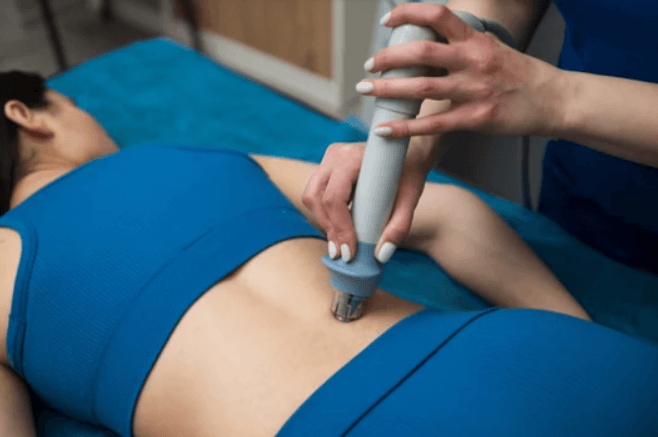
Extracorporeal Shock Wave Therapy is non-surgical and does not require an incision. During treatment, the provider identifies the affected area and applies the device according to the findings of the examination.
The purpose is not simply to temporarily mask discomfort. Shockwave approaches are generally used to stimulate a biological response within targeted tissues.
What Is Foot Shock Wave Therapy?
Foot Shock Wave Therapy refers to the use of shockwave technology in areas of the foot where persistent soft-tissue irritation may be present.
Heel complaints are one of the more common reasons people investigate this type of care. However, not every case of heel discomfort is appropriate for shockwave treatment.
A provider should first determine where the symptoms are coming from. Pain near the heel can involve different structures, and similar symptoms may have different causes.
That evaluation helps determine whether a Shockwave Therapy Treatment makes sense or whether another approach should be considered.
How ESWT Shock Wave Therapy Differs From Stretching
Stretching primarily changes the length and flexibility of muscles and related tissues. ESWT Shock Wave Therapy, on the other hand, delivers mechanical energy into a targeted area.
Because the approaches work differently, one does not necessarily replace the other.
A treatment plan may include activity modification, mobility work, changes in footwear, or other conservative strategies alongside shockwave care depending on the individual situation.
This is also why someone who has already tried stretching should not assume that persistent symptoms mean nothing else can be done. The issue may simply require a different type of assessment.
Repeated Loading Can Keep Heel Tissue Irritated
One reason heel pain can linger is that the foot rarely gets complete rest.
Everyday activities such as walking through the house, commuting, shopping, exercising, and standing at work continue to place pressure through the foot. Even relatively modest amounts of activity can add up when a tissue is already irritated.
A sudden increase in walking, new workout routine, change in work demands, or return to recreational activity may also exceed what the tissue is currently prepared to tolerate.
For active residents of Verrado, AZ, identifying these loading patterns can be just as important as determining what treatment may be appropriate.
Persistent Heel Pain Deserves a More Specific Evaluation
Morning heel pain does not automatically mean a serious problem, and many cases improve with conservative changes. However, discomfort that repeatedly returns despite stretching, supportive footwear, and reasonable activity modification may warrant closer evaluation.
The goal is to understand which tissues are involved, what activities may be continually irritating them, and whether options such as Shockwave Therapy are appropriate.
When heel pain continues despite common self-care strategies, looking beyond the shoes or the stretching routine can provide a clearer understanding of why the problem has persisted and what the next step should be.